Monday, 9 November 2015

Scarface - Say Hello To My Little Friend


It’s not often that a Brian De Palma film has dialogue that becomes part of pop-culture lore. This isn’t to say that his films aren’t commercially or artistically successful, simply that De Palma primarily expresses himself visually. While The Untouchables has its fair share of quotable lines (courtesy of David Mamet), it’s the dialogue from Scarface that’s endlessly repeated (preferably with a heavy Cuban accent), as affected by Al Pacino as the ruthless small-timer Tony Montana, who rises rapidly to the top of the underworld. He gets the money, the power, and the woman (Elvira, played by Michelle Pfeiffer) that he desires, but it’s not long before he just as quickly falls from on high, in spectacular style. Aside from the now-famous lines, Scarface is also remembered for other reasons: the huge amount of swearing; the graphic violence (particularly the chainsaw murder), the mountain of cocaine that Tony buries his face in (the perfect symbol of destructive excess and oblivion), and the climatic “Made it, Ma! Top of the world”-style gun battle, to name but a few.
It’s therefore surprising to think that this hugely popular and highly influential update of Howard Hawks’s classic Scarface met with howls of criticism when it was originally released. Remaking a Hawks film may have seemed sacrilegious at the time, but this Scarface remake is vastly superior to the majority of recent updates of classic films and TV shows. Instead of an actor, director, and screenwriter working on autopilot, Scarface has the impressive filmmaking triumvirate of De Palma, Stone, and Pacino. This combination of talent in front of and behind the camera must have had the executives at Universal eagerly anticipating another Godfather-style epic; a tasteful and sober examination of organised crime and the Miami cocaine business, and a film that would bring in big bucks and gain critical kudos. The result, though, wasn’t a subtle dissection of gangster life, but the equivalent of a bloodstained and bullet-riddled body, with De Palma and his crew ripping the guts out of the gangster movie and leaving the result on the operating table for all to see.
Scarface presents us with a tacky, gaudy, sleazy world, where billboards and murals depict a paradise of sunsets and palm trees (a “fake paradise” look that’s carried over into Body Double and reappears in Snake Eyes), which hides the ugly reality of the drug world, and eventually serves as a backdrop for violence and murder. Although the combination of gangsters, guns, and cocaine promises a rapid-fire pace with flashy camera moves to match, this is one of De Palma’s most visually restrained films. The camera often drifts slowly into scenes from above and picks out characters, or starts in close-up on an object and pulls out into a wide shot. But the languid camera moves are deceptive, slowly luring us into a world full of flamboyant characters who express themselves through aggressive talk and violent action. The sunlit streets and disco nightclubs (backed up by Giorgio Moroder’s electronic score, reinforcing the artificiality of the film’s world) suck these gullible characters into a corrosive capitalist nightmare that will consume and destroy them.
Although the film depicts a nightmarish world, it’s also very funny. There’s the “Fuck you!” “Fuck you!” one-upmanship between Tony and Omar (F. Murray Abraham), Tony telling a little kid on the beach to watch as the mafioso’s friend Manny (Steven Bauer) gets slapped by a girl, and Tony wearing Elvira’s sun hat (leading to a burst of laughter from Pfeiffer). But alongside the humor there are elements of horror. When Tony’s bloodied hand reaches into frame and rests on a sleeping Elvira, it’s like a beast rousing his beauty, or the Phantom of the Paradise getting his Phoenix. But the monstrous Tony also has a code of honor, an example being the moment when he refuses to blow up a car with children inside—an agonisingly suspenseful scene that was recently echoed in Spielberg’s Munich, and is a nod to Hitchcock’s Sabotage). This fateful decision precipitates Tony’s downfall: as frequently happens in De Palma’s unforgiving film world, if a character suddenly acquires a conscience, they’re mercifully punished for it.
Like the tiger chained up outside his mansion, Tony eventually becomes a prisoner in his own palace. He’s the ‘80s gangster equivalent of Charles Foster Kane—a demented capitalist trapped in his own Babylon, who ends up being bored, alienated, and alone. We only see Tony enjoying the high life in a brief montage sequence (the rapid scenes conveying the fleeting pleasures on offer), with the remainder of the film concerned with his slow descent into mistrust and paranoia. Tony ends up destroying himself and those he loves, including his younger sister, Gina (Mary Elizabeth Mastrantonio), an innocent whom he swiftly corrupts. The promise (seen on the side of the Goodyear blimp) that “The World Is Yours” at first seems like a gift to Tony, but it soon becomes a millstone around his neck, and finally an ironic epitaph when he dies, with the neon sign above the fountain where he falls to his death like an engraving on a headstone.
At the beginning of Scarface, we see archive footage of Fidel Castro giving a speech and Cuban refugees arriving on boats in Florida, echoing LBJ’s appearance on TV in Greetings. But the ‘60s mix of idealism and scepticism (with De Niro and his crew in Greetings rushing around New York dodging the draft and trying to get laid) is replaced by the ‘80s business ethos (with Pacino & Co. pursuing the era’s dream of accumulating wealth at the expense of anything else). When Tony berates the social x-rays and businessmen in a fancy restaurant, we’re seeing a Bonfire of the Vanities-type saga filtered through the gangster genre. Tom Wolfe’s hefty tome may be considered the literary summing up of the “greed is good” decade, but Scarface is the cinematic equivalent: a gun-toting, coke-snorting, chainsaw-wielding, no-holds-barred epic. “Push It To The limit” goes one song in the film and De Palma wilfully obliges.

Grade - B+ (Both Messed Up and Entertaining)

Monday, 19 October 2015

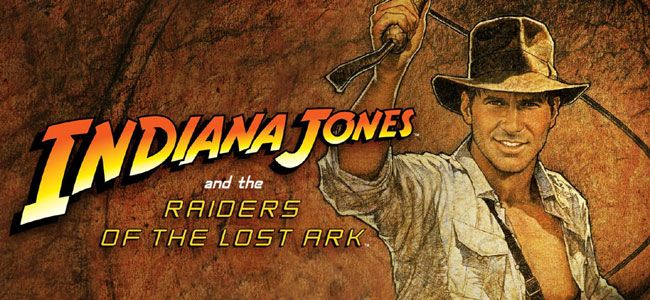
Raiders Of The Lost Ark


Every frame of Raiders of the Lost Ark contains an enduring iconography, not only because from scene to scene the picture surges with nonstop energy and craft, but because the production embraces a particular classicism balanced between nostalgia and sheer adventure. An undeniably familiar, reminiscent quality flows from director Steven Spielberg and producer George Lucas’ brilliantly spun yarn, from their use of historical and religious imagery to their deliberate evocation of Saturday matinee serials, all of which form an instant bond between the audience, film, and memory. This bond is not limited to the past, however; as much as Raiders of the Lost Ark reconnects the viewer with various histories, it also transcended those elements in 1981 by creating a bold new standard for adventure and blockbuster filmmaking. Countless imitators since the film’s release have made it an influential landmark. It is the ultimate escapist ride in which every subsequent foray into the genre attempts and ultimately fails to live up to.

In the preamble alone, Harrison Ford’s archeologist-adventurer Indiana Jones thwarts a double-cross, brushes away crawling spiders, dodges deadly traps, finds an ancient treasure, outruns a gigantic tumbling boulder, and narrowly escapes capture onto a plane. Watching the film is an experience entrenched in youthful escape. The whole viewing experience feels as though we’re seeing what happened when a young boy went out into the back yard to play adventure hero with his toys, except the boy has an $18 million budget backing his imagination, not to mention locations in Hawaii, La Rochelle, Tunisia, and England’s Elstree Studios where he can play. Steven Spielberg is the boy, his action figures are actors, and his playsets are the stuff of Hollywood movie magic. Indeed, Spielberg’s vision is rendered with a childlike intimacy and enthusiasm, his story rooted in the concerns of a rebellious teen, and his production executed with the precision of a master. From this he shapes unsurpassed escapist cohesion.
The first inkling of Indiana Jones was conceived back in 1973 by George Lucas, who, following a similar design for Star Wars, sought to revive the conceptual makeup of serials from The Golden Age of Hollywood both in story and execution. He pitched “The Adventures of Indiana Smith” to Steven Spielberg in 1977 while the two were on holiday together in the Hawaiian Islands, both recovering after their strenuous productions of Star Wars and Close Encounters of the Third Kind were completed. Lucas envisioned a James Bond thread based in the Saturday serial style and set around a soldier of fortune archeologist; though, Lucas’ model would later be guided away from his original dark playboy hero concept into the duality of professor-adventurer. Retooling the name from Smith to Jones and perfecting character attributes with screenwriter Lawrence Kasdan (Body Heat, The Big Chill), Lucas and Spielberg brainstormed what would later become key sequences in the film and its 1984 prequel, Indiana Jones and the Temple of Doom. From their talks, Kasdan constructed the screenplay and refined the jumble of ideas coming from his producer and director into a wispily plotted adventure tale.

Never deriving from a direct source, the film’s emulation of cliffhanger-laden serials from the 1930s-1950s—those featuring heroes like Flash Gordon, Dick Tracy, The Phantom, The Perils of Pauline, and Tarzan, among others—is flawless. Each Saturday a series would return to theaters, running through its succession chapter after chapter, week after week, always seemingly ending with the penultimate finale, the audience rapt as they wondered if this was the week their hero wouldn’t make it out alive. A serial adventurer confronts insurmountable dangers bringing him inches from death, leaving him to stop the Bad Guy, save The Girl, plant a smooch on her lips, and locate the treasure that splashes a golden light onto his face. The story is the same every time but with a detail or two switched around for effect, embracing enough all-out excitement to keep audiences coming back to finish out the fifteen to twenty consecutive episodes. Raiders of the Lost Ark has the same effect, simply without a week between the serial’s deathly setup and learning the outcome. Instead, the film’s action sequences are strung together like so many pearls.

How draining it is to endure Indy barely surviving an onslaught of neverending dangers! Those with breathing troubles should avoid viewings, as we constantly gasp and hold our breath with barely a moment allowed to catch up. Setup as a progression of cliffhangers like so many serials, the plot moves from place to place, tracking with lines on a map each stop from Peru to Nepal to Egypt and so on, never allowing our attention spans to relax, and keeping us perpetually thrilled. We watch Indy dodge poison tipped darts, survive snake-filled tombs, outsmart nefarious Nazis, and in the end, of course, save the day (or at least recover the artifact his government commissioned him to obtain). Set in 1936, the picture tails us behind Harrison Ford’s embodiment of part-time college professor and full-time history-defending Indiana Jones, whose bored students seem oblivious to their instructor’s off-the-clock exploits, but not-so unaware of his sex appeal. He’s assisted in the scholarly by Marcus Brody (Denholm Elliot), with resources by Egyptian excavator Sallah (John Rhys-Davies), and in the adventure of romance by long lost love interest Marion Ravenwood (Karen Allen). Indy’s need of others plays a great role in the formation of Ford’s intensely human, subtly flawed, but nevertheless heroic character.

Famously, scheduling and contract conflicts with Magnum P.I. barred Tom Selleck from accepting the Indiana Jones role, leaving it open for Ford’s most memorable and beloved performance. Lucas popularized Ford as Han Solo in his Kurosawa-inspired space opera, making the otherwise unknown actor a cowboy of the stars. And despite the popularity Ford’s Solo would receive between A New Hope and Return of the Jedi, he was not yet a screen idol when cast in Raiders of the Lost Ark. Often noted for his dry humor, Ford’s naturalism is his greatest appeal and the lasting characteristic of his performance. He carries out the bulk of his own stunts, so when Indiana Jones is dragged behind a Nazi truck we see Ford’s face and not some stuntman’s. He is perhaps the most easily identifiable physical presence in Hollywood, marked by his signature haphazard run and half-cocked smile. The actor’s wobbliness emphasizes Jones’ peak appeal: his vulnerability, his humanness. Indy takes blow upon blow, leaving him bruised and battered, and when the adventure is all over, he takes a nap, reclined with his distinctive fedora pulled down over his eyes.

Legendary in the moment he first appears onscreen, Indiana Jones has a reputation before his adventure begins: he is a known “obtainer of rare antiquities.” The government agents asking him to acquire The Ark of the Covenant from a band of Nazis already know his standing and reference his renowned fantastical exploits. Who else but the famous Dr. Jones would they ever entrust with such a task? His first filmic story feels as though it should be his fifth, as he needs no origin tale to be understood; rather, his onscreen persona is so singular and immediate that within the first fifteen minutes we have all requisite information we need: Always covered in dust from whatever cavern or tomb he exhumes, Indiana Jones is a pseudo-cowboy exploring the world’s historical frontiers, even riding the occasional horse and exemplifying cowboy iconography. He is a hero in the most straightforward way. He penetrates the vast unknowns of history looking for fact (not truth, he reminds us in The Last Crusade, “If it's truth you're looking for, Dr. Tyree's philosophy class is right down the hall.”), though he often finds himself directly engrossed in cultural mysticisms, the upshots of which make him spiritual, not religious, but certainly an historical romantic.

Every adventure story, Indiana Jones’ more than most, requires a MacGuffin—the device around which the film’s events revolve. Otherwise, what is our adventure-seeker seeking and why? Early concept talks between Lucas and Phillip Kaufman pinpointed the Ark of the Covenant, and Kaufman received story credit as a result of his contribution. A MacGuffin’s specificity can and often is inconsequential: a Maltese Falcon, Sankara Stones, Captain Kidd's lost treasure, the Holy Grail, Cortés’ gold, Crystal Skulls, or the unearthed tomb of Qin Shi Huangdi. The journey’s the thing, as they say. So often these details are obsolete next to the respective film’s momentum, but not in Raiders of the Lost Ark; this particular MacGuffin is not so impersonal as to be dismissed as a mere storytelling contrivance to propel the plot. A piece of Hewbrew lore, the Ark was built under God’s instruction (complete with mathematical assembly instructions) to contain the tablets with the Ten Commandments inscribed by Moses, lending Spielberg’s picture a religious background which audiences instantly recognize the importance and wonderment thereof. More importantly, it’s doubtful anything so engrained into Hebrew legend could be insignificant to the same Jewish filmmaker who made Schindler’s List.

Taking another cue from Saturday serials, Raiders of the Lost Ark adopts Nazis as its villains. But more than just Nazis, these are quintessentially evil Nazis, and in opposition of them Indiana Jones stands as quintessentially good. Indeed, Spielberg takes joyous aim against Nazis and presents them as dehumanized, exceptionally malevolent, and single-minded in their utter evil. They are the antithesis to Jones and the unhallowed exploiters of all that is divine, signified by the Ark. When the Nazis’ swastika is imprinted upon the wooden crate containing the relic, we hear burning godly radiation singe away their stamp. Historically used by Abrahamic, Buddhist, Christian, and Hindu religions, and others, the swastika dates back to the Neolithic Period, formerly signifying universality and good luck. But nevermind its origins or positive uses. The Nazis’ particular brand of malevolence and prominent implementation of the image wipes away any application before or since their (relatively) brief reign of terror, mutating the symbol into a universally known signature of evil, which Spielberg emphasizes to powerful thematic ends by suggesting Nazi imagery alone is unholy.

Consider the possibility of a less absolute villain. If it weren’t for the Nazis, Indiana Jones would be just another soldier of fortune competing against someone not unlike himself, rather than a do-gooder of superhero proportions. But more than that, Spielberg’s passion in the project is felt so potently because the story, even on its pure escapist level, weighs on the filmmaker’s Jewish heritage. After all, the Nazis’ ultimate “solution” of wiping the Jews from the planet was Hitler’s sadistic design, while the film remarks that Hitler himself is a “nut” for Ark lore. At stake then is not only the fate of an archeological landmark, but the entire Jewish people, which for Spielberg must have sounded a personal involvement in the story, even if his treatment of this theme avoids dwelling on the story’s weightier implications. Unlike Jaws, where bringing mass entertainment to the screen was a mere job handed down to him, Raiders of the Lost Ark feels like a kind of lightweight passion project for the director. He must take some kind of adolescent delight from instilling Nazi iconography as the language of sin, and moreover, representing the Nazis as cartoonishly evil adventure villains to further their status as the ultimate, unquestioned movie bad guys—so evil their faces melt from the wrath of God in the presence of holy spirits. Even the Nazis’ henchman, the Vichy slime Belloq (Paul Freeman), is unwaveringly venal.

Beyond recalling religious and historical iconography, Spielberg delves into motion picture iconography as well. In keeping with the enduring classicism of the entire picture, Spielberg’s approach remains rooted deeply in Golden Age cinema traditions. The direction and mannerisms of certain actors springs from early cinema action yarns, with Spielberg’s visual flourishes recalling those of legend Michael Curtiz on films like The Adventures of Robin Hood. Spielberg even occasionally throws some of his action up on the wall in silhouetted shadow—such as in Marion’s bar scenes or Indy inside the Ark’s tomb—a staple of Curtiz’s oeuvre. Meanwhile, Ford carries the undeniable charisma of Humphrey Bogart, and the brash physicality and humor of Errol Flynn, meeting somewhere in the middle with a charming impetuousness. Allen as Indiana’s love interest is never reduced to merely a damsel in distress; she partakes in drinking contests and throws hard punches, but never forgets her femininity, recalling Barbara Stanwyck’s greatest roles. And lest we forget the nefarious Major Toht (Ronald Lacey), the spitting image of Peter Lorre; he laughs with a sinister, nasal hee-hee we love to hate.

As suggested, the film’s instantaneous classicism is not only rooted in the past, but as a result of the iconography that Spielberg himself creates, or in some cases recreates from scene to scene. Take his reclamation of the Paramount Pictures mountain logo. Each Indiana Jones film is preceded with this studio logo, an image used in some form or another for the company’s more than hundred years of making motion pictures. An illustration familiar to moviegoers, the logo fades into a similar mountaintop landscape in Raiders of the Lost Ark’s Peruvian jungle scenes, filmed on location in Hawaii (whose peaks were scouted for this very reason). This trend continues in the sequels with the embossed Shanghai gong in Temple of Doom, Utah’s Arches National Park scenes in The Last Crusade, and, quite humorously, the groundhog mound in Kingdom of the Crystal Skull. The effect connects the viewer with a history of filmmaking as amusement, escape, entertainment, and fun, suggesting Spielberg seeks to appease imaginations and blockbuster appetites in the same sweep, as opposed to generating something more severe to be contemplated and analyzed.

Raiders of the Lost Ark explores and re-consecrates an adventure style unused and forgotten for decades, but also fashions its own milestone through awe-inspiring, splendidly tangible effects setups, unmatched in their natural grandeur and scope even with today's computer technology. Some filmmakers rely on advanced CGI to easily render special FX, including Spielberg in a number of his later science-fiction undertakings, but here Spielberg remains grounded by the film's tactile reality in an ode to the film’s Saturday serial origins. Shot fast and with few takes, the naturalistic execution of the production alone, accomplished by designer Norman Reynolds, feels familiar, playful, gritty, and genuine, while the more elaborate effects were conceived in large part by Lucas’ genius company Industrial Light & Magic. There’s nothing computer-generated about the obvious model planes, nor anything artificial about Indy going face-to-face with a cobra, Marion hanging from a statue’s jaw in an evening dress, or Indy’s fisticuffs with a brutish Nazi ending in a propeller disaster. In-camera effects, matte paintings, and makeup do the rest. And yet, with such epic-sized physical imagery, subtler details like the interlude map trailing Indy’s course from country to country remain equally characteristic and illustrative of Spielberg’s throwback classicism.

Upon its release, the picture’s sources became less important than the film itself, which attained rapid pop-culture phenomenon status, earning over $200 million in domestic box-office receipts, enthusiastic reviews, and adoration from moviegoers. Raiders of the Lost Ark would be nominated for nine Academy Awards in 1982, winning four for Best Art Direction, Best Film Editing, Best Sound, Best Visual Effects, and a fifth Special Achievement Academy Award to Ben Burtt for his unique Sound Effects Editing. Over the years, several sequels, videogames, and a spinoff TV show would follow. In adapting the past, Spielberg and company had created a brand all its own, a trademark so singular even the silhouette of Indiana Jones is recognizable. From John Williams’ score to the posters painted by Drew Struzan, every facet of the film would become and still is iconic. And though some critics, most notably Pauline Kael, would dismiss the production as a product of a New Hollywood “marketing department”, the film has outlived such critiques because, as much as it is a successful blockbuster and another landmark for Spielberg, it is great filmmaking.


The film’s legacy exists as an incandescence gleaming from the entire production, radiant with the gilded character of Golden Age cinema and its inescapable link to the historical imagery therein. Shining even more is Spielberg’s distinct touch, a splendorous glow of icon renovation and discovery, his way of fathering images that somehow burn into our collective memory and remain there for all time. How impossible it is to feel anything but wonderment about this film, like Indiana Jones himself standing before his shimmering prize, the rays of this treasure illuminating his face. As moviegoers and cinephiles, we often dodge the traps of Hollywood’s disappointments and leap over its treacherous half-hearted failures, but rarely do we find a motion picture like this at the end of our journey, burnishing as it does under a light from above, just waiting for us to take it. There it sits, a perfect and immaculate treasure combining artistry and entertainment in a way only true masters can achieve. Upon finding Raiders of the Lost Ark on its dais, before we escape with our prize, we must take a moment to stand back in awe and admiration, our faces enlightened to a kind of filmmaking decades old in 1981 and all but lost today.

Grade - A

Ghostbusters


Halfway through the initial release of Ghostbusters, director Ivan Reitman decided to run a new trailer on TV. He simply took the mock-television commercial snippet from the movie and inserted a real usable number. At the other end was a recorded message, from Murray and Akroyd, running along the lines of "Hi, we're out catching ghosts right now, please leave a message." The line received 1000 calls an hour, 24 hours a day for six weeks. Ghostbusters was more than just a groovy comedy from the Saturday Night Live stable, more than a special effects driven, spoofy blockbuster, more than just a smash hit movie. It was a bona fide phenomenon. Something that had eked out of the cinemas straight into the public conscious as its exuberant mantra "Who ya gonna call?" chimed from playgrounds to shopping malls.

The original idea, born in Dan Aykroyd's head, was of a set of intergalactic Ghostbusters competing with rival companies in the future. Director Ivan Reitman was the man to ground the idea, bringing it back to Earth and New York City and introduced the notion of this madcap start-up company arriving, just as seriously sinister goings on hit town. Originally, a range of different names were suggested for the main roles: John Belushi for Venkman, Eddie Murphy for Winston, John Candy for Louis Tully. But you can't imagine a more fitting trio for the bumbling, boilersuited spiritual pest control than Murray, Aykroyd and Ramis.

The characterisation and much of the comedy is constructed around the differing (and conflicting) personalities — and varying attitudes toward their science — of the three main Ghostbusters (loosely modelled on the Three Stooges). Peter Venkman (Murray — Moe) is a feast of asinine one-liners, a vessel of dominant sarcasm for whom the pursuit of knowledge is inseparably entwined with the pursuit of girls. Raymond Stantz (Ackroyd — Curly) is bumbling and loveable; brains wrapped up in a clown's clothing: science is a way of avoiding a proper job. Egon Spengler (Ramis — Larry) is nerdy and absent-mindedly professorial, for whom science is everything at the expense of common sense. Ernie Hudson's PC-friendly presence as fourth, blue collar 'Buster Winston feels token and underdeveloped.

Constructed with deft commercialism, the film is as about as undemanding as you can get. The supernatural element is cartoonish and barmy ("Gozer the Traveller, He will come in one of the pre-chosen forms. During the rectification of the Vuldrini, the traveller came as a large and moving Torg!") and the set pieces spectacular but credible within the confines of the story (New York is given a weird, Gothic expansiveness). The script — by Ramis and Aykroyd — skillfully grounds itself in Venkman's teasing bile ("I don't have to take this abuse from you, I've got hundreds of people dying to abuse me") as it spouts out ludicrous pseudo-rational scientific jargon ("Free floating, full torso, vaporous apparition"). Even its plot makes some kind of sense with a park-side apartment building becoming a gateway to the netherworld and the reincarnation of a Babylonian demon. Not to forget the contribution of Ray Parker Jr.'s hit theme song, adding to the joie de vivre of blockbuster success.

Vitally important to the hook, was the juxtaposition between New York's brazen cynicism and the daft supernaturalism. The Mayoral office — led by William Atherton's (Thornburg from Die 5 Hard) snidley bureaucratic meddler—refuse to give credence to the phantasmagoric threat until it is almost too late. For every far- fetched episode Venkman has a snide retort — after a headlong collision with a bulbous lime green entity, Venkman, coated in ectoplasm, just moans, "He slimed me!" Another pivot is the
combo of romantic interest cellist
^ Sigourney Weaver and her dweeby o pest of a neighbour, Rick Moranis' goofball accountant — both soon H to be possessed by sinister spirits
2 (to become known as the
Keyholder and the Gatekeeper, fnarr!) and become the focus of the impending apocalypse. Events hurtle along, leaving little room to stop and ponder why it is so many otherwordly events directly coincide with the formation of this outfit. And while the effects feel dated by today's standards (the Sta-Puft Marshmallow man
stomping up the street is evidently a giant inflatable) there is a quaint charm to their limitations.
Given its hugeness, the movie was followed by an inevitable but grossly inefficient sequel — something to do with yet another evil entity knocking at the door of reality and a giant river of slime under Manhattan. Strangely,

though, given the popular levels Ghostbusters reached in the mid-80s, it has left little trace of itself. Apart from the marketing, that is, this was the birth of the movie-as-logo (everything from Batman to Jurassic Park followed suit). Yet this was the first true fusion of blockbuster and all-out comedy.

Grade - A

Aliens


In 1986, James Cameron made the quintessential sequel: Aliens, a model for all sequels as to what they could and should aspire to be. Serving as writer and director for only the third time, Cameron reinforces themes and develops the mythology from Ridley Scott’s 1979 original, Alien, and expands upon those ideas by also distinguishing his film from its predecessor. The short of it is, Cameron goes bigger—much bigger—yet does this by remaining faithful to his source. Instead of simply replicating the single-alien-loose-on-a-haunted-house-spaceship scenario, he ups the ante by incorporating multitudes of aliens and also Marines to fight them alongside our hero, Sigourney Weaver’s Ellen Ripley. Still working within the guise of science-fiction’s hybridization with another genre, Cameron delivers an epic actionized war thriller rather than a horror film, and effectively changes the genre from the first film to second to suit the demands of his narrative and personal style. Through this setup, Cameron completely differentiates his film from Alien. And in his stroke of genius innovation, he made movie history by achieving something rare: the perfect sequel. 

Opening precisely where the original left off, though 57 years later, the film finds Ripley, the last survivor of the Nostromo, drifting through space when she is discovered in prolonged cryogenic sleep by a deep space salvage crew. She wakes up on a station orbiting Earth traumatized by chestbursting nightmares, and her story of a hostile alien is met with disbelief. The moon planetoid LV-426, where her late crew discovered the alien, has since been terra-formed into a human colony by Weyland-Yutani Corporation (whose motto, “Building Better Worlds” is ironically stenciled about the settlement), except now communications have been lost. To investigate, the Powers That Be resolve to send a team of Colonial Marines, and they ask Ripley along as an advisor. What Ripley and the Marines find is not one alien but hundreds that have established a nest within and from the human colony. Cameron’s approach turns the single beast into an anonymous threat, but also considers the frightening nest mentality of the monsters and their willingness to carry out orders given by a maternal Queen, who defends her hive with a vengeance. Alongside the aliens are an unrelenting series of situational disasters threatening to trap Ripley and crew on the planetoid and blow them all to smithereens. The result is a nonstop swelling of tension, enough to cause reports of physical illness in initial audiences and critics, and enough to burn a place into our moviegoer memory for all time.


No end of in-camera effects, mirrors, rear projection, reverse motion photography, and miniatures were designed by Cameron, concept artist Syd Mead, and production designer Peter Lamont to extend their budget. H.R. Giger, the visual artist behind the original alien’s design, was not consulted; in his place, Cameron and special FX wizard Stan Winston conceived the alien Queen, a gigantic fourteen-foot puppet requiring sixteen people to operate its hydraulics, cables, and control rods. Equally elaborate was their Powerloader design, a futuristic heavy-lifting machine, operated behind the scenes by several crew members. The two massive beasts would collide in the film’s iconic finale duel, requiring some twenty hands to execute. Only in-camera effects and smart editing were used to produce this seamless sequence. Lightweight alien suits painted with a modicum of mere highlight details were worn by dancers and gymnasts, and then filmed under dark lighting conditions, rendering vastly mobile creatures that appear almost like silhouettes. The effect allowed Cameron’s alien drones to run about the screen, leaping and attacking with a force unlike what was seen in the brooding movements of the creature in Scott’s film. Cameron even worked closely with sound effect designer Don Sharpe, laboring over audio signatures for the distinctive alien hissing, pulse rifles, and unnerving bing of the motion-trackers. He toiled over such details down to just weeks before the premiere, and Cameron’s schedule meant composer James Horner had to rush his music for the film—but he also delivered one of cinema’s most memorable action scores. No matter how hard he pushes his crew, Cameron’s method, it must be said, produces results. Aliens would go on to earn several technical Academy Award nominations, including Best Sound, Best Film Editing, Best Art Direction/Set Decoration and Best Music, and two wins for Sound Effects Editing and Visual Effects.

Though Cameron’s most obvious signatures reside in his obsession with tech, rarely is he given credit for his dramatic additions to the franchise. Only because her Weyland-Utani contact, Carter Burke (a slithery Paul Reiser), promises their mission is to wipe out the potential alien threat and not return with one for study, does Ripley agree to going back out into space. Cameron deepens Ripley by transforming her into a somewhat rattled protagonist at first, disconnected from a world that is not her own. In her time away, her family and friends have all died; we learn Ripley had a daughter who passed while she was in hyper-sleep. She is alone in the universe. It is her desire to reclaim her life and her concern about the colony’s families that impels her back into space. But when they arrive at LV-426 and discover evidence of a massive alien attack, her motherly instincts take over later as they locate a sole survivor, a 12-year-old girl nicknamed Newt (Carrie Henn). A mini-Ripley of sorts, Newt too has survived the alien by her ingenuity and wits, and almost instantly she becomes Ripley’s daughter by proxy. Moreover, like Ripley, Newt attempts to warn the Marines about the dangers that await them, and likewise her warnings go ignored.

For his ensemble of Colonial Marines, Cameron cast several members of his veritable stock company, all capable of the larger-than-life personalities assigned to them. The inexperienced Lieutenant Gorman (William Hope) puts on airs and old hand Sergeant Apone (Al Matthews) barks orders like a drill instructor. Privates Vasquez (Jenette Goldstein, who later appeared in Terminator 2: Judgment Day) and Hudson (Bill Paxton, who worked with Cameron on several Corman flicks and appeared in The Terminator as a punk thug) could not be more different, she a resolute “tough hombre” and he an all-talk badass who turns into a sniveling defeatist when the pressure is on (“Game over, man!”). Ripley is weary of the android Bishop (Lance Henriksen, who starred in Cameron’s first two directorial efforts), but the innocent, childlike gloss in his eyes never betrays its promise. For Corporal Hicks, Ripley’s pseudo-love interest and the Marine who takes charge when the rest are gone, Cameron originally cast James Remar, but personality conflicts led Cameron to recast. Michael Biehn took over, having just starred as the hero of The Terminator, and filled the character with a quiet heroism and dependability. As the story’s strain intensifies, Cameron never forgets to enlarge his characters through their reactions; by the end, not one of them feels one-dimensional or forgotten during the director’s writing process, the effect not unlike great Vietnam War movies of the preceding years (Apocalypse Now, Full Metal Jacket, Platoon, etc.).

To be sure, the director’s fascination with special FX, futuristic hardware, gun fetishization, and militarism informed many plot elements and designs, all closely linked in some way to Vietnam War imagery. The Marine’s space ship, the Sulaco, was conceived with clear forward momentum (unlike the square, towering Nostromo) resembling the shape of a gun. Their dropships are mashup designs of F-4 Phantom jets and AH-1 Cobra helicopters of the Vietnam War. The Marines themselves were garbed in rugged armor decorated with personalized graffiti, maxims reminiscent of “Born to Kill” and so forth, and equipped with massive firepower. These over-armed Marines hunt an unseen force in a hostile environment; they enter cocky and certain of their own superiority, only to be cut down by “animals”. Their invested superiors have explicit corporate interests to protect, represented by Burke, making for apparent historical parallels but also a fixed theme in Cameron’s subsequent films. In that sense, Cameron may specifically channel Vietnam imagery here, but he also remarks on a time-honored human tradition in our willingness to sacrifice a group of people if it serves the perceived “greater good”. In the case of Aliens, Burke’s motivations are purely his own financial gain. His inhuman greed leads Ripley to one of the film’s best lines: “You know, Burke, I don't know which species is worse. You don't see them fucking each other over for a goddamn percentage.”

To emphasize his Vietnam parallel, Cameron outlines a hopeless situation that goes from bad to worse in a series of impossibly horrific events. Having located the colonists through transmitters that confirm they have been huddled together in one section of the complex, the Marines resolve to roll-in guns blazing and save the day. What they find, however, are walls enveloped with cocoon-like resin and inside colonists who serve as hosts to alien Facehuggers. All at once, the aliens attack and, caught off guard, the Marine’s numbers are cut down to a handful. By the time they escape, their shootout has caused a reactor leak that will detonate in a number of hours. Panicked, outnumbered, outgunned, and now out of time, the few survivors huddle together, section themselves off, and attempt to devise a plan. To escape, they must manually fly down a dropship from the Sulaco. But as the coolant tower fails on the complex’s reactor, the entire site slowly goes to hell and will soon detonate in a thermonuclear explosion. And the persistent aliens never stop trying to penetrate the Marines’ defenses. If alien creatures and a massive blast were not enough, there’s also Burke’s attempt to impregnate Ripley and Newt as alien hosts, resulting in a sickening corporate betrayal. Each of these elements builds with unnerving pressure that leaves the audience totally absorbed and twisting internally.

Until the final thirty minutes of Aliens, the creatures, now dubbed “xenomorphs” (a name derived from the director’s boyhood short, Xenogenesis), seem almost circumstantial. In a final assault, their swarms have reduced the human crew down to Ripley, Hicks, and Bishop, and they have captured Newt for cocooning. Ripley must search for her alone, and after she rips the child from a prison of spindly webbing, she rushes headlong into the egg-strewn lair of the Queen, an immense creature excreting eggs from its oozing ovipositor. In Cameron’s hands, the xenomorph becomes more than a “pure” killing machine, but now a problem-solving species with clear motivations within a larger hive and analogous family values. Cameron underlines the family theme in both human and alien terms during an exchange of threats between the two jealous mothers to protect their offspring, Ripley with her proxy Newt wrapped around her torso and the Queen guarding her eggs. This tense moment of horrific calm bursts into Ripley raging as she opens fire on the Queen’s unfolding pods, then flees chase with the gigantic monster close behind to a breathless rescue by the Bishop-piloted dropship. The idea of motherly protection and retaliation comes to a glorious head aboard the Sulaco, when the Queen emerges from the dropship’s landing gear compartment only to face a Powerloader-suited Ripley, who snarls her iconic battle call, “Get away from her, you bitch!”

If the setting is Vietnam in space, how appropriate then that Weaver nicknamed her character “Rambolina”, equating Ripley to Sylvester Stallone’s shell-shocked Vietnam vet John Rambo from First Blood and its sequels (interesting note: at one point in the early ‘80s, Cameron had written a draft of Rambo: First Blood Part II). Certainly Ripley’s mental scaring from the events in Alien accounts for her sudden eruption of hostility on the alien Queen and its eggs, not to mention her general autonomous and take-charge attitudes throughout the film, but Cameron’s persistent need to keep families together in his works is Ripley’s true driving force. Weaver understood this, and therefore set aside her otherwise stringent anti-gun sentiments to embrace these other new dimensions for her character (a good thing too; in addition to the aforementioned Oscar nominations, Weaver received her first Academy Award nomination for Best Actress for playing Ripley the second time). Along with Hicks as the stand-in father (but by no means paterfamilias), she and Newt form a makeshift family Ripley is desperate to defend. It is that balance of gung-ho fearlessness and motherly instinct that makes Ripley such a powerful feminist figure and rare movie action hero. Alien may have made her a star, but Aliens transformed Sigourney Weaver and her Ellen Ripley into cultural icons whose status and importance in the annals of film history have been cemented.

A continuing need to preserve the nuclear family prevails in Cameron’s work: Sarah Connor protects her unborn son and humanity’s savior John Connor alongside his future father Kyle Reese in The Terminator, and later protects the teenage John beside another fatherly substitute, Schwarzenegger’s good-hearted killer robot in T2: Judgment Day. Ed Harris’ undersea oil driller rekindles a failed marriage in the face of marine aliens and nuclear war in The Abyss (1989). Schwarzenegger’s superspy in True Lies (1994) shields his family by keeping them uninformed; but to stop a terrorist plot and save his kidnapped daughter, he must reveal his secret identity. Avatar (2009) follows a broken-down war vet who finds a new family and race amid a group of tribal aliens. But the preservation of family is not the only recurring Cameron theme originating in Aliens. Notions of corrupt corporations, advanced technologies manned by blue-collar workers, and the allure but ultimate failure of advanced tech when posited against Nature all have a place in Cameron’s films, and each has a foundational block in Aliens.
When it was released on July 18 of 1986, audiences and critics deemed the film a triumph, and many declared Cameron’s sequel had outdone Ridley Scott’s original. Only a week after its debut, Aliens made the cover of Time Magazine, and along with its impressive box-office and several Oscar nominations, Cameron’s film had achieved a kind of instant classic status. Unquestionably, Aliens is a more accessible picture than Alien, as beyond the science-fiction surroundings of each film, action and war pictures have larger audiences than horror. But if Cameron’s efforts can be faulted, it must be for his lack of subtlety and tempered artistry that by contrast allow Scott’s film to transcend its limitations and become a vastly finer work of cinema. There’s no one who does intricate and visionary blockbusters like Ridley Scott, but there’s no one who makes bigger, more macho, more wowing blockbusters than James Cameron. Indeed, a few years later, the director’s already ambitious runtime was extended from 137 to 154 minutes in a superior “Special Edition” for home video. The alternate version includes scenes deleted from the theatrical release, including references to Ripley’s daughter, the appearance of Newt’s family, and a scene foreshadowing the arrival of the alien Queen. But to ask which film is better ignores how the first two entries in the Alien series remain galaxies apart in story, technique, and impact.


That comparing the first film to the second becomes a matter of apples and oranges is wonderfully uncommon. If more filmmakers took Cameron’s approach to sequel-making, Hollywood’s franchises might not seem so dull and homogenized today. With Aliens, Cameron refuses to reproduce Alien by carbon-copying its structure and simply relocating the same outline to another setting, and yet he reinforces the original’s themes in his own ways. Whereas Scott’s film explores the horrors of the Unknown, Cameron acknowledges human nature’s curiosity to explore the Unknown, and in doing so reveals a new series of terrifying and breathlessly thrilling discoveries. Infused with horror shocks, incredible action, unwavering machismo, state-of-the-art technological innovations, and on a more basic level great storytelling, Cameron’s film would become the first of his many “event movies”. After Aliens, he may have gone bigger or flashier, but his equilibrium between form and content has never been so balanced. It is a sequel to end all sequels.

Grade - A+